Global AI Datacenter Expansion Drives GPU and Hardware Price Surge
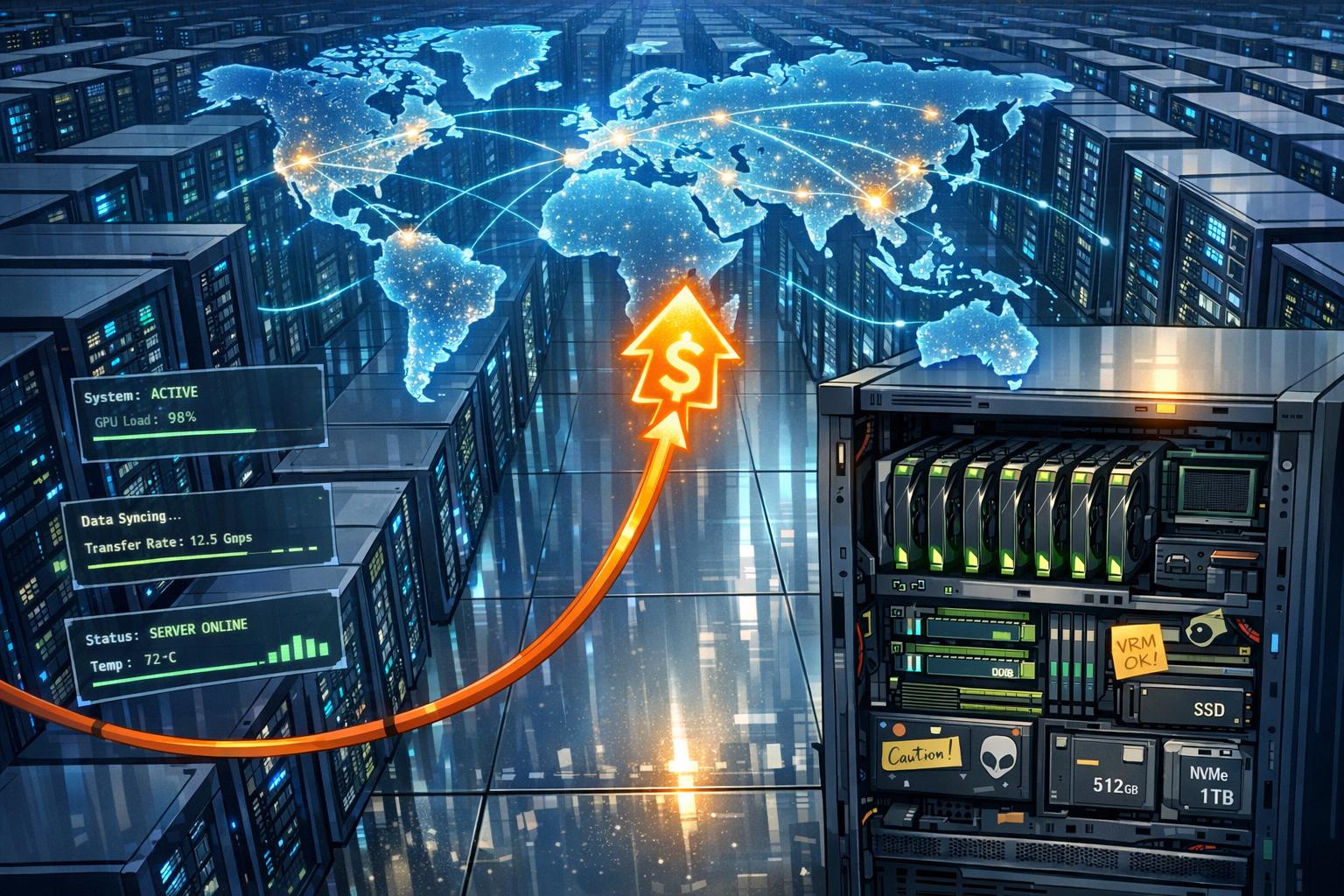
The rapid expansion of artificial intelligence (AI) systems is creating ripple effects across the global technology landscape, particularly in the datacenter industry. As companies race to build the computational infrastructure necessary to power cutting-edge AI applications, the demand for essential hardware components is skyrocketing, leading to significant price increases for GPUs, DRAM, and SSDs.
Rising Hardware Costs Amid AI Growth
The global push for AI-driven technology has turned computational power into a critical strategic asset, driving sharp increases in the cost of the hardware that fuels datacenter operations. Graphics processors (GPUs), memory (DRAM), and solid-state drives (SSDs) – key components in datacenters – have all seen price hikes as hyperscale demand tightens supply chains. The strain on supply is now being passed down to businesses and, eventually, consumers.
Over the past three months, GPU prices have surged as demand for AI-related computing power continues to grow. While memory prices have stabilized in the short term, they remain significantly higher compared to last year. SSD storage, a component often overlooked, has also emerged as a notable driver of rising datacenter costs.
sbb-itb-f9e5962
European Providers Feel the Pressure
One stark example of how hardware inflation is reshaping the industry comes from Hetzner, one of Europe’s largest independent datacenter and infrastructure providers. The company recently announced price increases of up to 33% across its server offerings in multiple regions, citing rising hardware procurement and operating expenses. These adjustments, set to take effect on April 1, 2026, include cloud servers, storage services, and dedicated servers.
Since Hetzner operates at scale across several regions, its pricing decisions are often viewed as a barometer for broader industry trends. The company’s moves suggest that many infrastructure providers are grappling with the dual challenges of soaring hardware costs and rising capital investment requirements needed to expand datacenter capacities.
Impact Across the Value Chain
The implications of rising costs are far-reaching. Businesses relying on cloud infrastructure may face reduced margins or forced pricing adjustments to offset higher hosting expenses. For startups and smaller companies, managing cloud budgets will likely become increasingly challenging in this cost-intensive environment.
While consumers may not feel the effects immediately, the higher costs of datacenter operations could eventually translate into more expensive subscription services and digital products. As the physical backbone of the internet grows more costly, all participants in the digital economy may need to adapt to the shifting financial landscape.
Local and Global Implications
Finland, which has positioned itself as a datacenter-friendly destination in recent years, is not insulated from these global trends. Local businesses operating in the digital space are also expected to experience the effects of rising costs in hardware and infrastructure.
As costs continue to climb, both businesses and consumers are encouraged to prioritize financial planning and make informed decisions. The era of inexpensive, easily scalable digital infrastructure may be shifting, leaving companies and households to navigate a more expensive digital future.
"AI systems require vast computing capacity. As more companies invest heavily to secure that capacity, global hardware supply tightens. At the same time, expanding datacenters requires substantial capital investment. When equipment and financing costs rise together, providers often pass part of the increase on to customers", the original report noted.
For businesses across the globe, the message is clear: careful cost management and proactive planning are more critical than ever as the AI revolution continues to reshape the economic dynamics of digital infrastructure.